
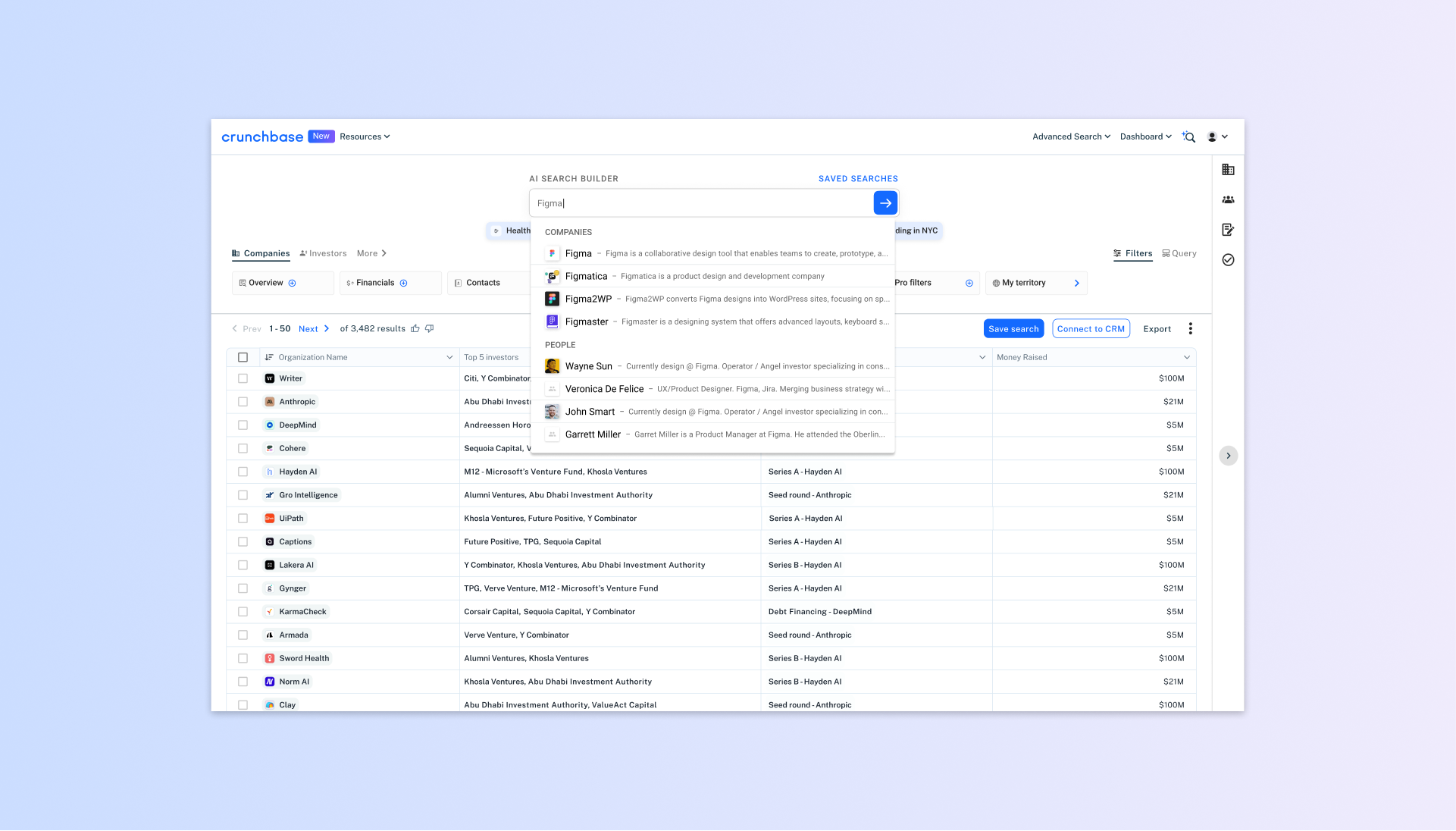
Redefining discovery on Crunchbase
Improving how users discover data and find value faster.
UX case study link
Role: Product Strategy, Product Design, UX Research
Team: PM, engineering lead, Sr. Product Designer
Timeline: Late 2023 - Feb 2025
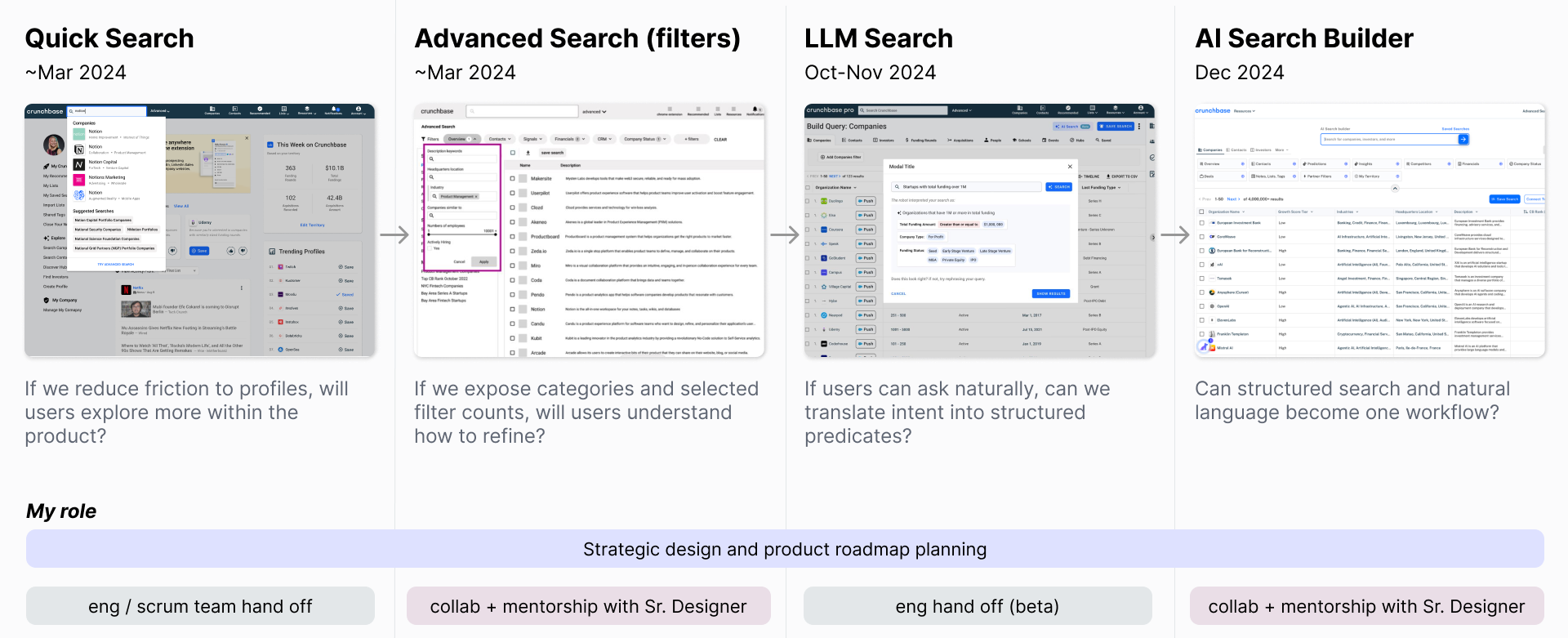
I led a series of strategic initiatives that reduced friction, simplified complex workflows, and explored new interaction models for AI-powered discovery. Those efforts ultimately informed the AI Search Builder that launched in February 2025.
Outcome: 11% increase in users saving searches, 4x increase in 6-month retention, 45% decrease in median searches before saving, and 11% more users saving searches.
Search wasn’t scaling
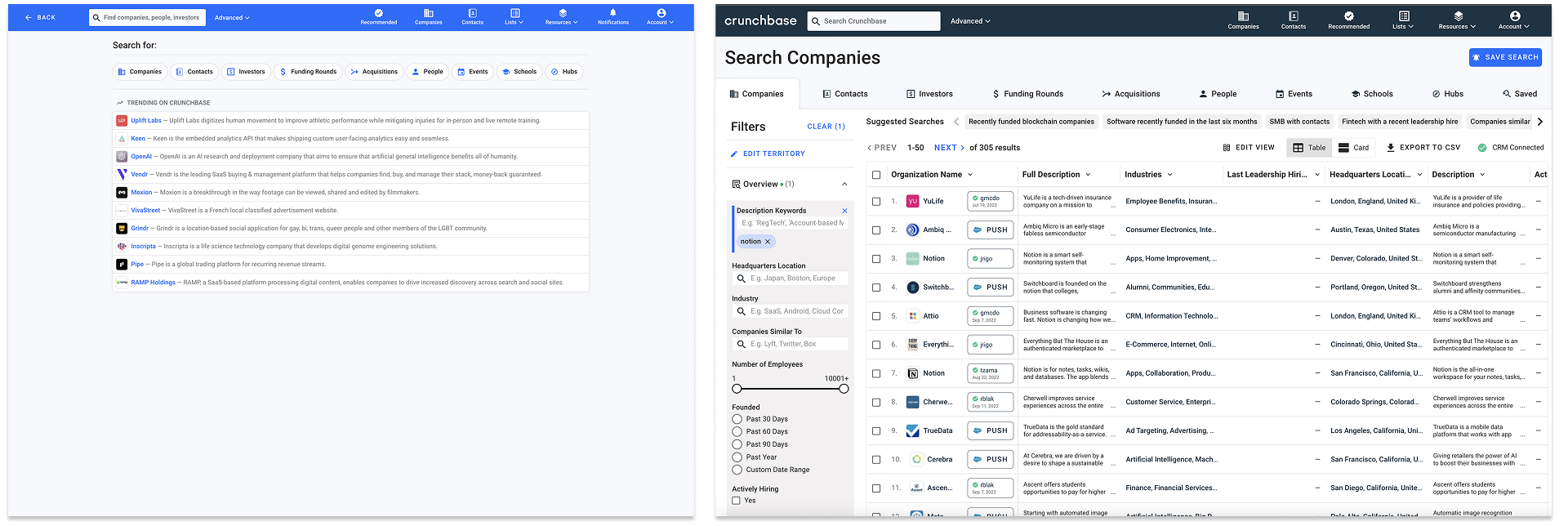
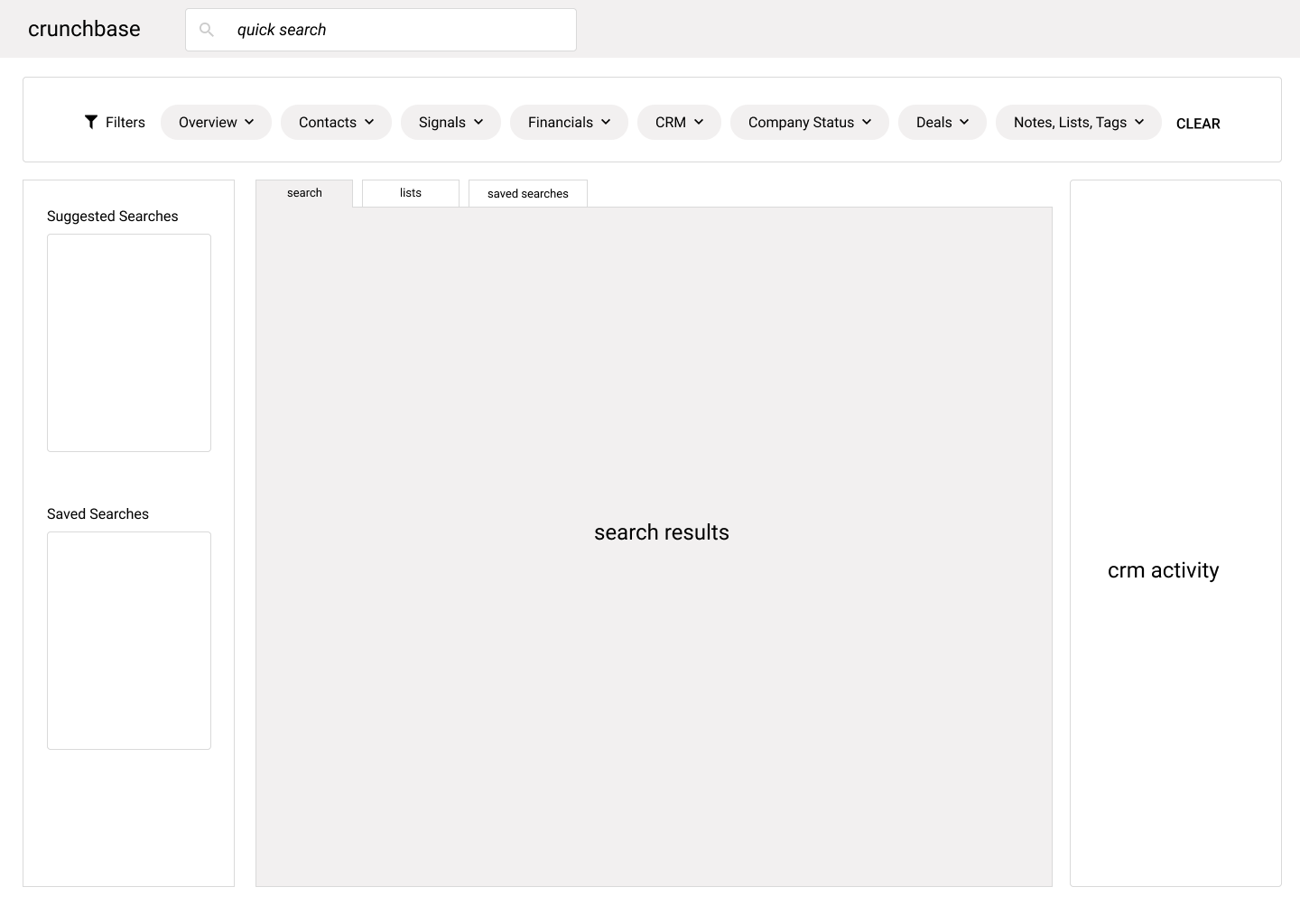
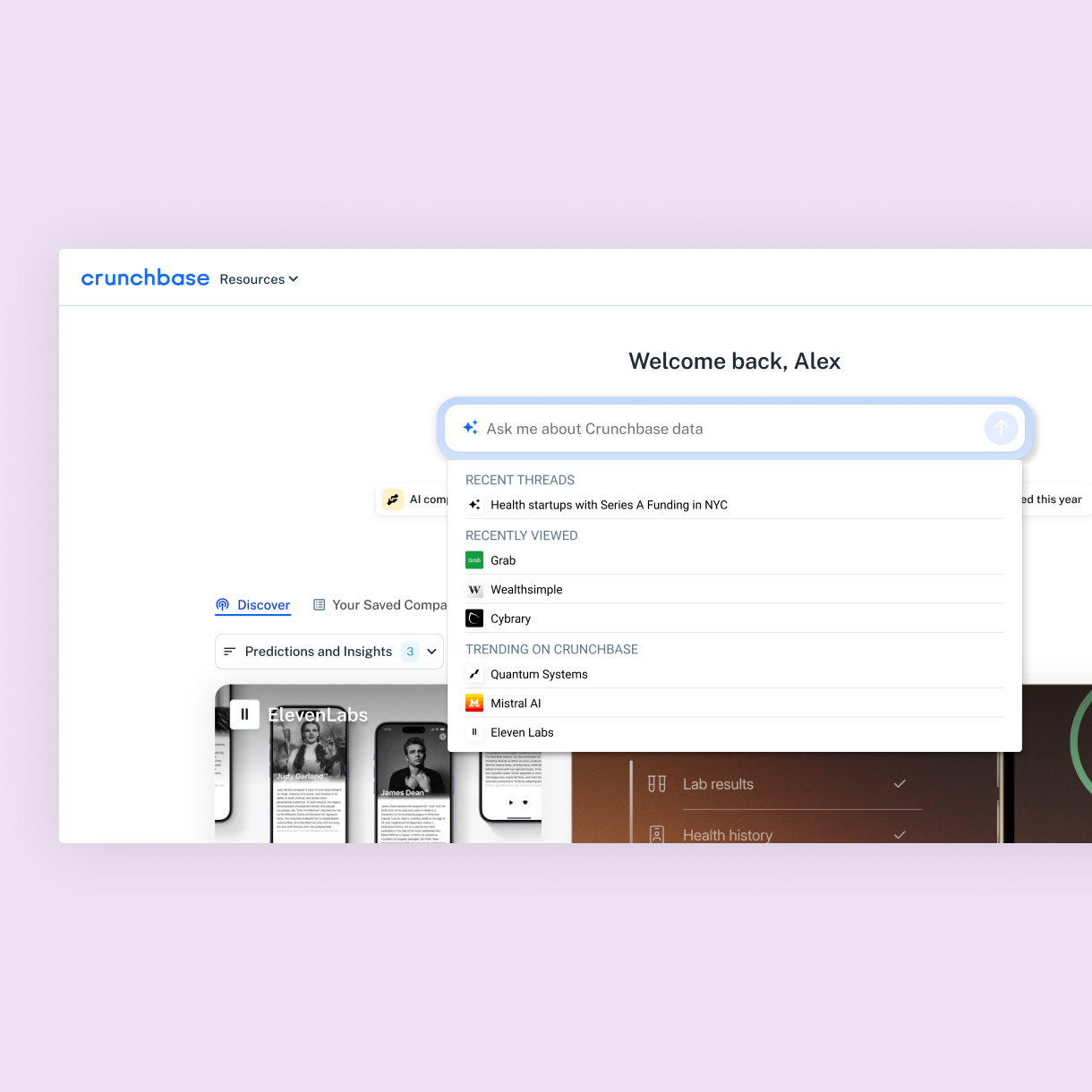
Crunchbase offered powerful search capabilities across millions of companies, investors, funding rounds, and growth signals. As the platform expanded, the search experience became increasingly fragmented. Quick Search prioritized routing users to Advanced Search rather than helping them complete a simple lookup task. Advanced Search offered powerful filtering, but required users to learn a complex system before they could find what they needed.
Design Strategy
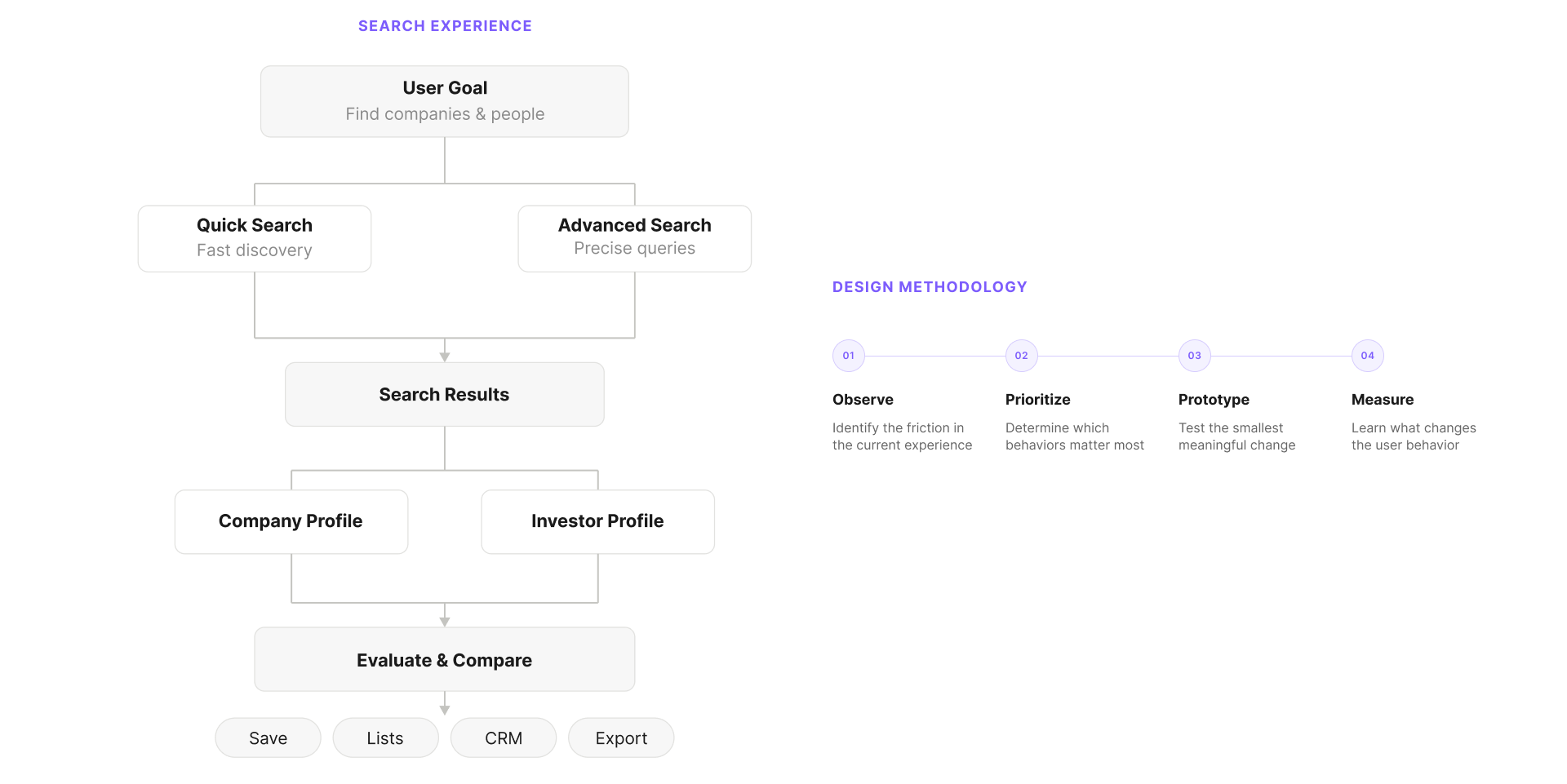
I evaluated the search experience holistically and developed UX concepts that informed future product initiatives. Every opportunity ran through the same loop: observe the friction in the current experience, prioritize the behaviors that matter most, prototype the smallest meaningful change, and measure what actually shifts user behavior. Mapping the full journey — from user goal through Quick Search, Advanced Search, and results, to evaluating, saving, and exporting — showed where users fell out of flow and where the leverage was. This allowed the team to reduce risk while building toward a longer-term vision for Search.
Reducing friction with Quick Search
The problem was that Quick Search & Advanced Search required different modes of research and user behavior. When clicking into the top Quick Search bar, users were abruptly taken out of context, creating unnecessary cognitive load. In addition, if a user pressed enter, they were immediately taken to Advanced Search. The additional step interrupted user flow, introduced unnecessary complexity, and shifted users from finding a company to constructing a query. Our hypothesis was simple: reducing friction would help users reach valuable company data faster.
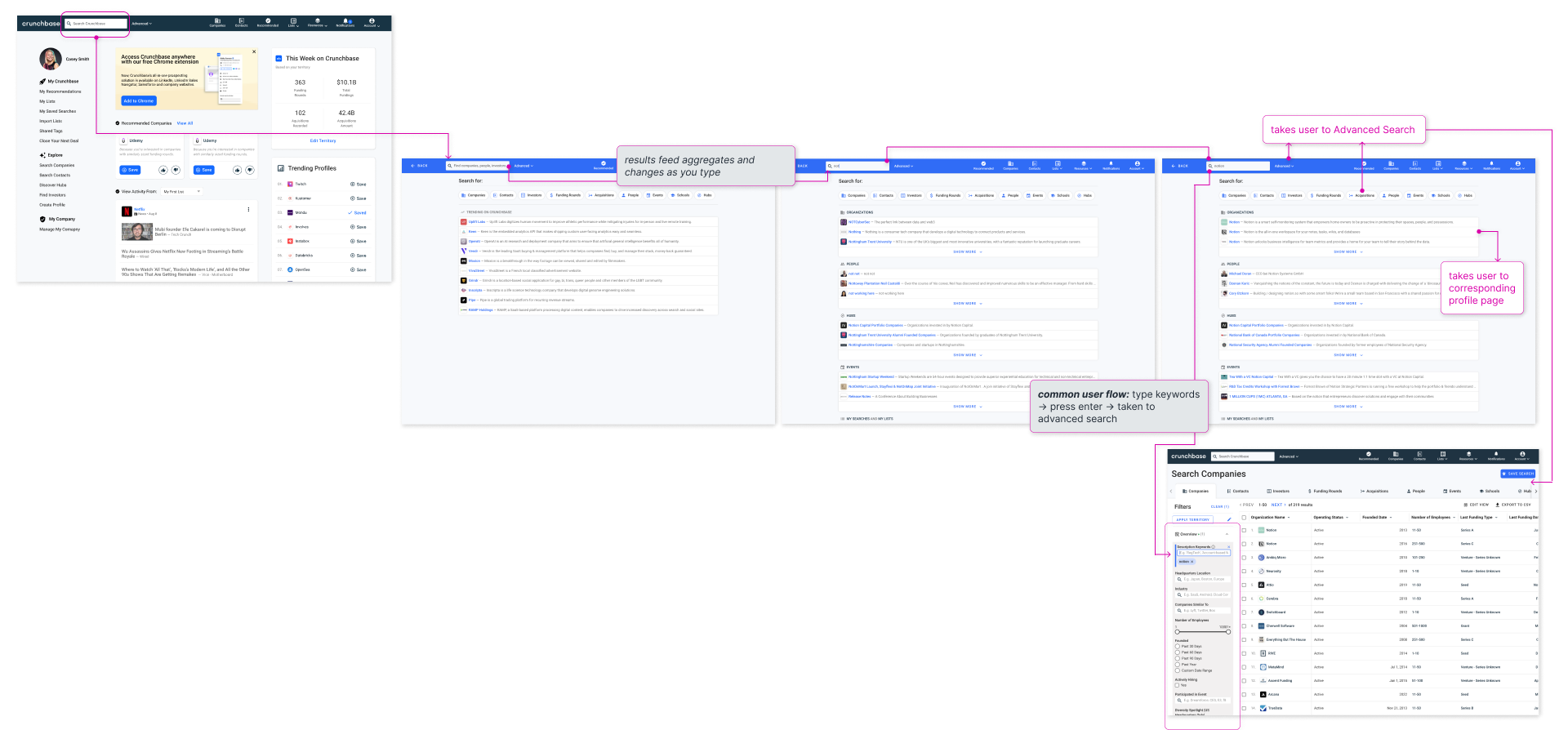
Validating the direction
Hypothesis: If we reduce unnecessary transitions to Advanced Search, users will reach profiles faster, without hurting meaningful Advanced Search usage.
Experiment 1 — No Enter: We removed the automatic redirect to Advanced Search on Enter.
Result: +8.6% average profile views per user
Experiment 2 — Results in Quick Search: We let users access and view results without leaving Quick Search.
Result: +28.5% core trial starts, +15.2% users saving searches, +16.9% saved searches per user, and a +49% engagement increase among users who intentionally opened Advanced Search.
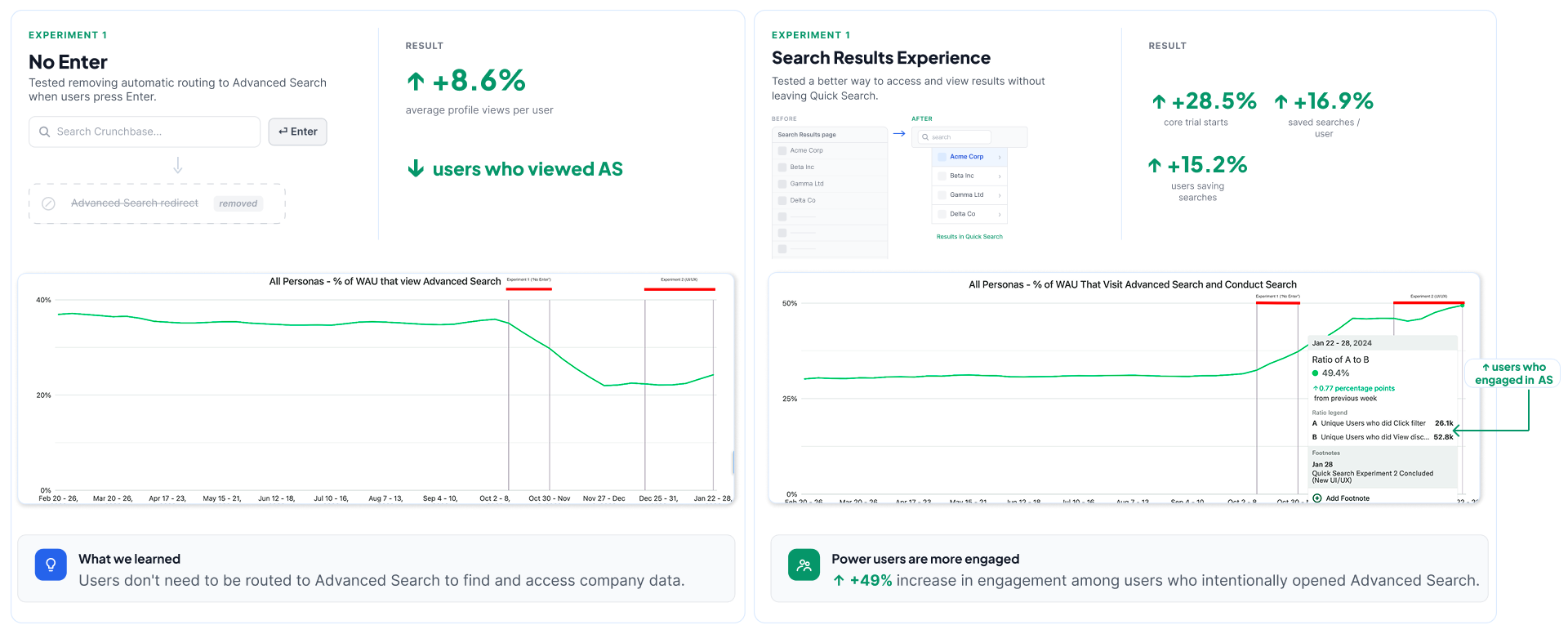
The results supported expanding Quick Search with richer inline results and direct navigation to profiles, while reserving Advanced Search for high-intent workflows.
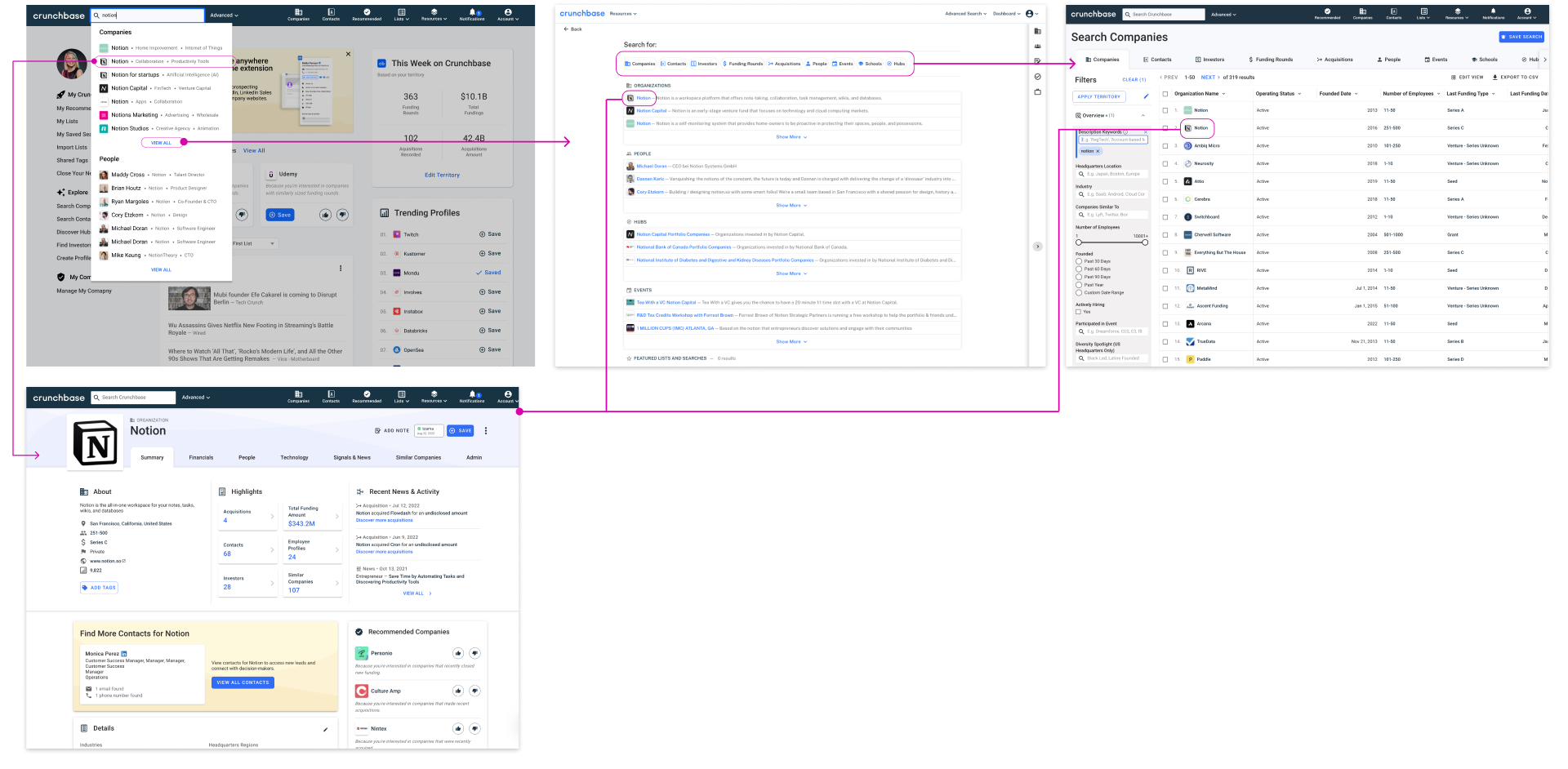
Advanced Search Filter UX: Making filters visible, scannable, refinable
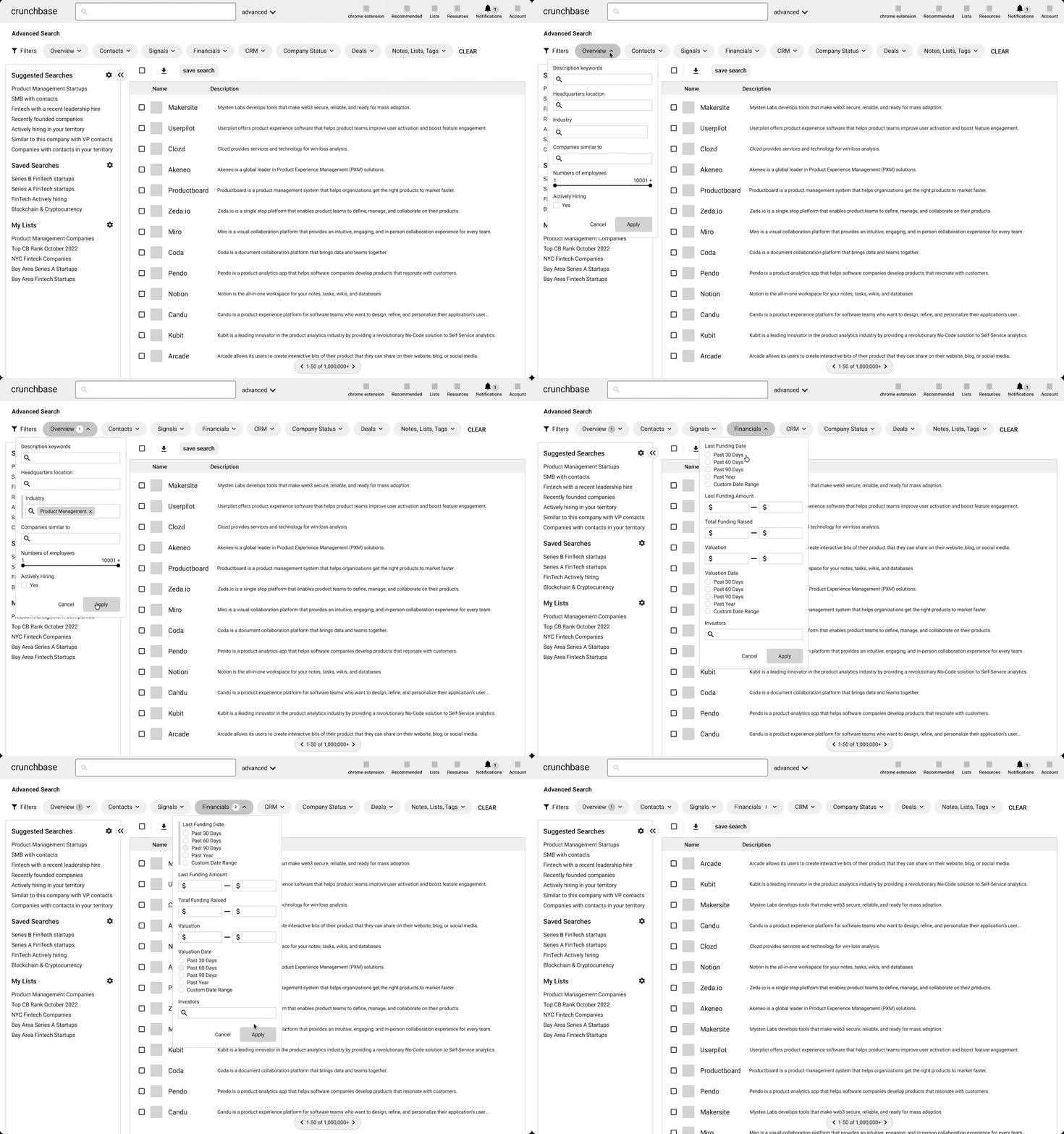
To understand how users actually constructed searches, I combined user testing sessions, FullStory recordings, and internal documentation. There was a clear opportunity to make filters more visible, scannable, and easier to refine, with suggested searches to help users jump in.
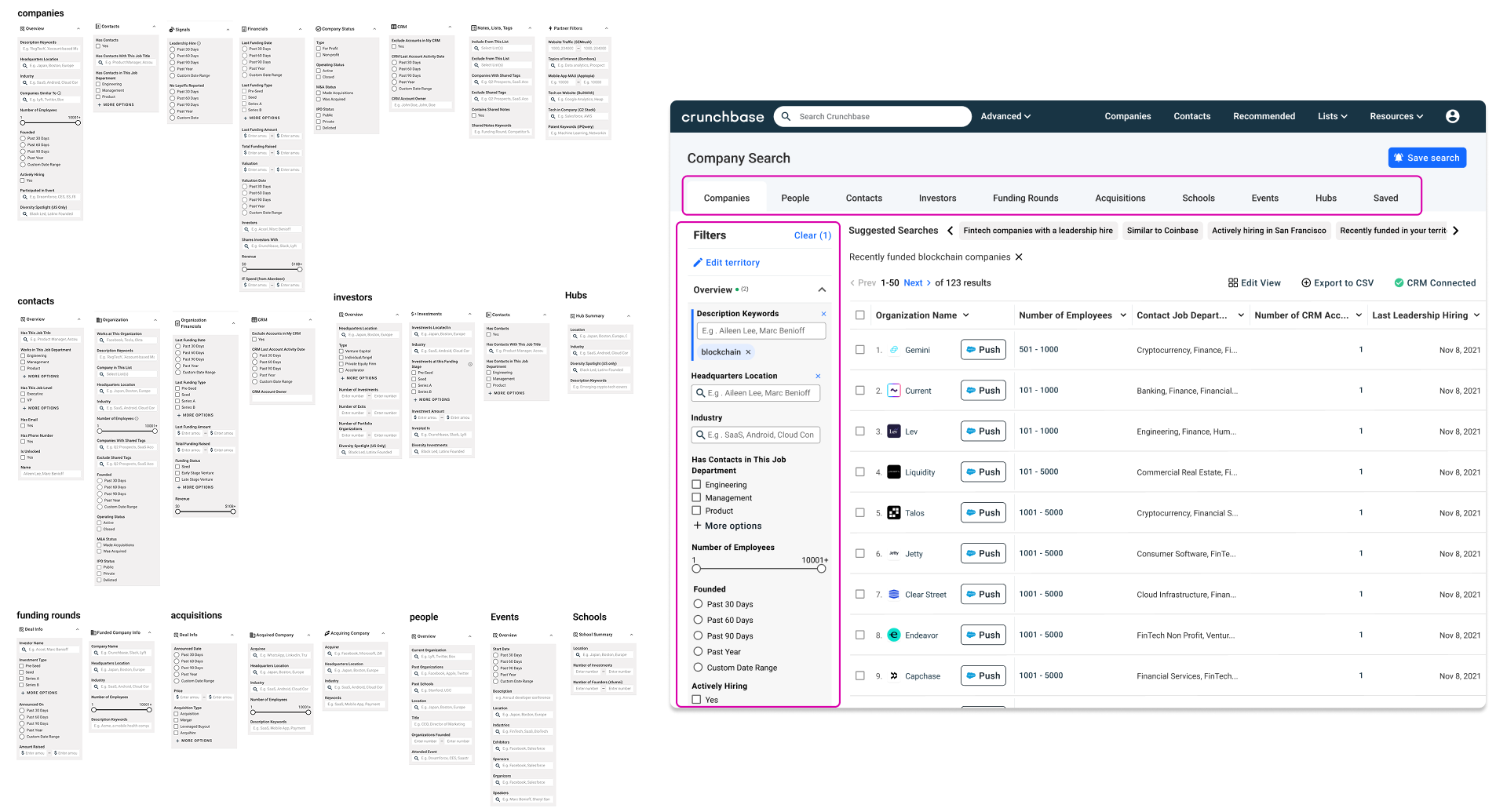
These explorations established a more scalable search interaction model, making it possible to introduce AI-powered query building within an experience users already understood.
LLM Search Beta
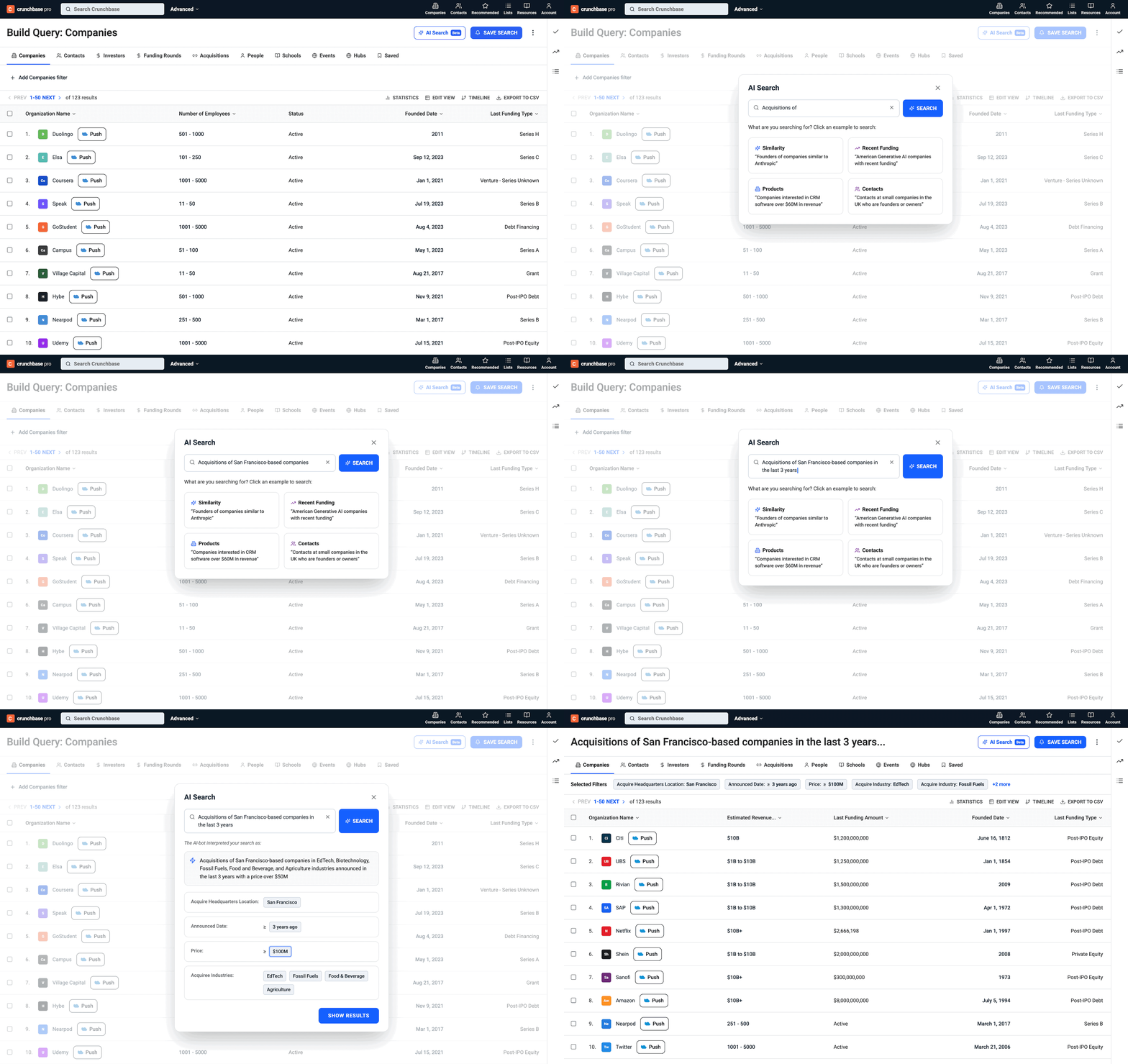
I next worked with two lead engineers on the first Crunchbase LLM beta search experience, which translated natural language into a structured search. We quickly iterated with pre-existing components to build the AI search user experience.
The beta experience introduced a confirmation step before running each search. This was a deliberate design tradeoff: users could review and refine the AI’s interpretation before committing, while the interaction generated the feedback needed to improve the model over time. We accepted the additional step during beta to prioritize learning and build confidence in the system.
Design Strategy
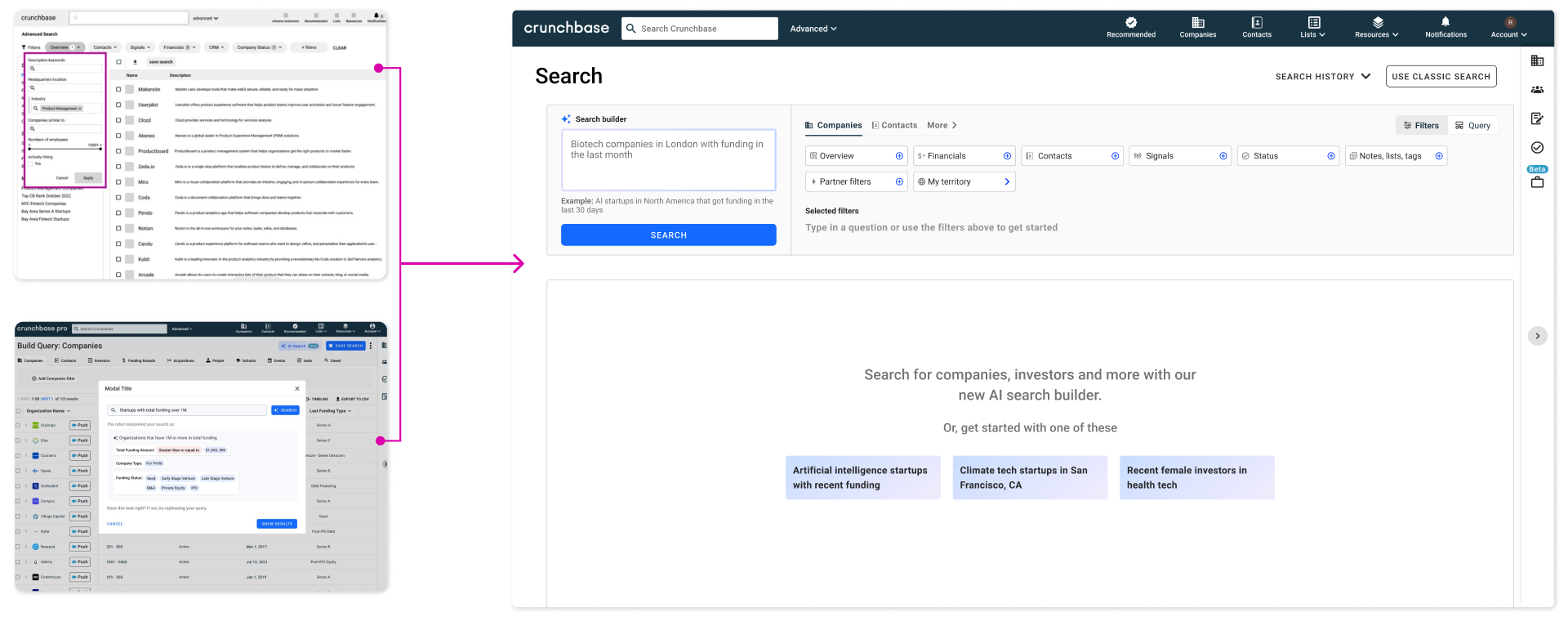
Removing the confirmation step created an opportunity to unify two parallel explorations: natural language search and a redesigned filter experience. Bringing them together established a single interaction model where users could generate, inspect, and refine searches within one workflow.
Scaling through collaboration
As the initiative expanded, the focus shifted from concept exploration to production implementation. The interaction patterns established through the Quick Search experiments, filter redesign, and LLM beta became the foundation for the next phase of the work.
I partnered closely with another senior designer to evolve those concepts into experiment-ready prototypes while continuing to shape product direction, customer research, and design strategy. Together, we refined the experience through beta testing, preserving the core interaction principles as the product moved toward launch.
Building confidence in the beta
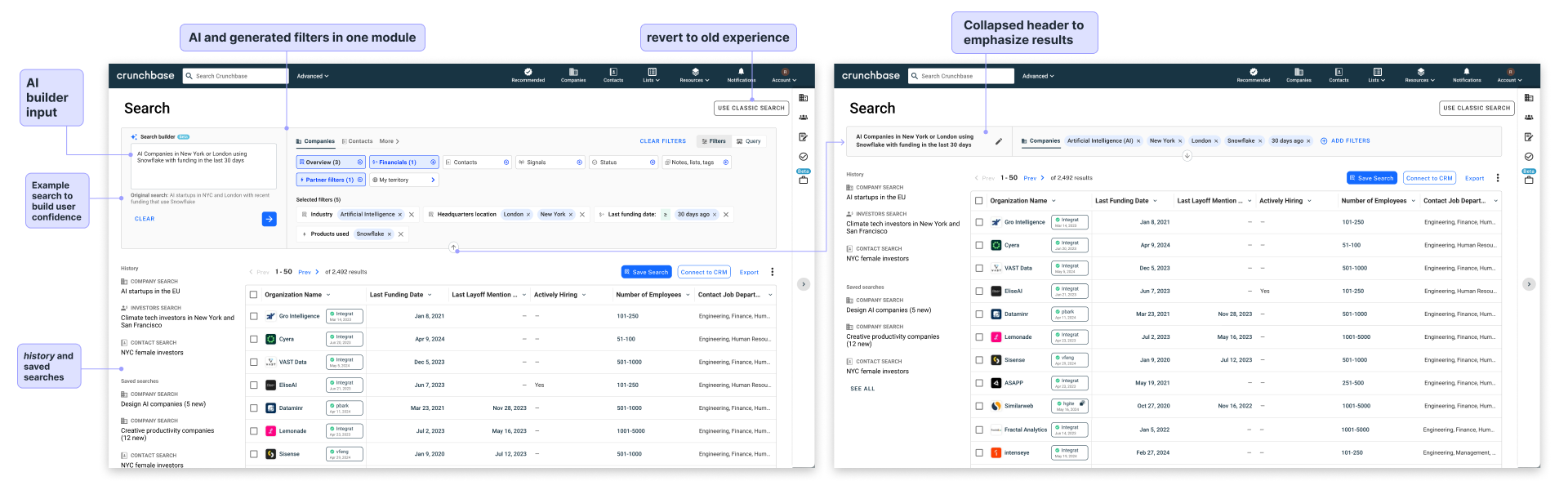
The beta addressed two barriers to adoption. Query examples were placed prominently to help users understand how to begin, while the AI input and generated filters were presented within the same module to make the relationship between them visible. This helped users see how natural language was translated into structured search, making the system easier to understand, evaluate, and refine.
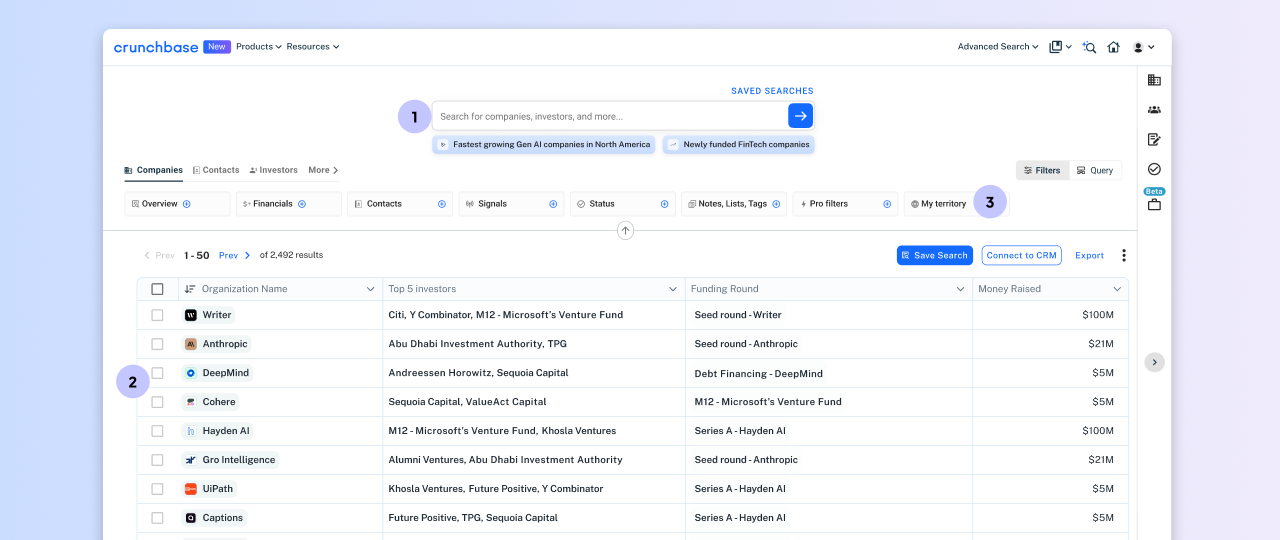
AI Search Builder
The beta validated the value of natural language search while revealing a broader opportunity. Customers unfamiliar with Advanced Search adopted AI quickly, while experienced users continued to prefer manual filters for speed and precision. Regardless of experience level, participants consistently preferred the beta experience over the previous workflow. The more significant insight was that query creation represented only the beginning of the search experience. Once results were generated, users needed confidence that the AI had interpreted their intent correctly before they could evaluate and act on the data. This shifted the interaction model beyond query creation.
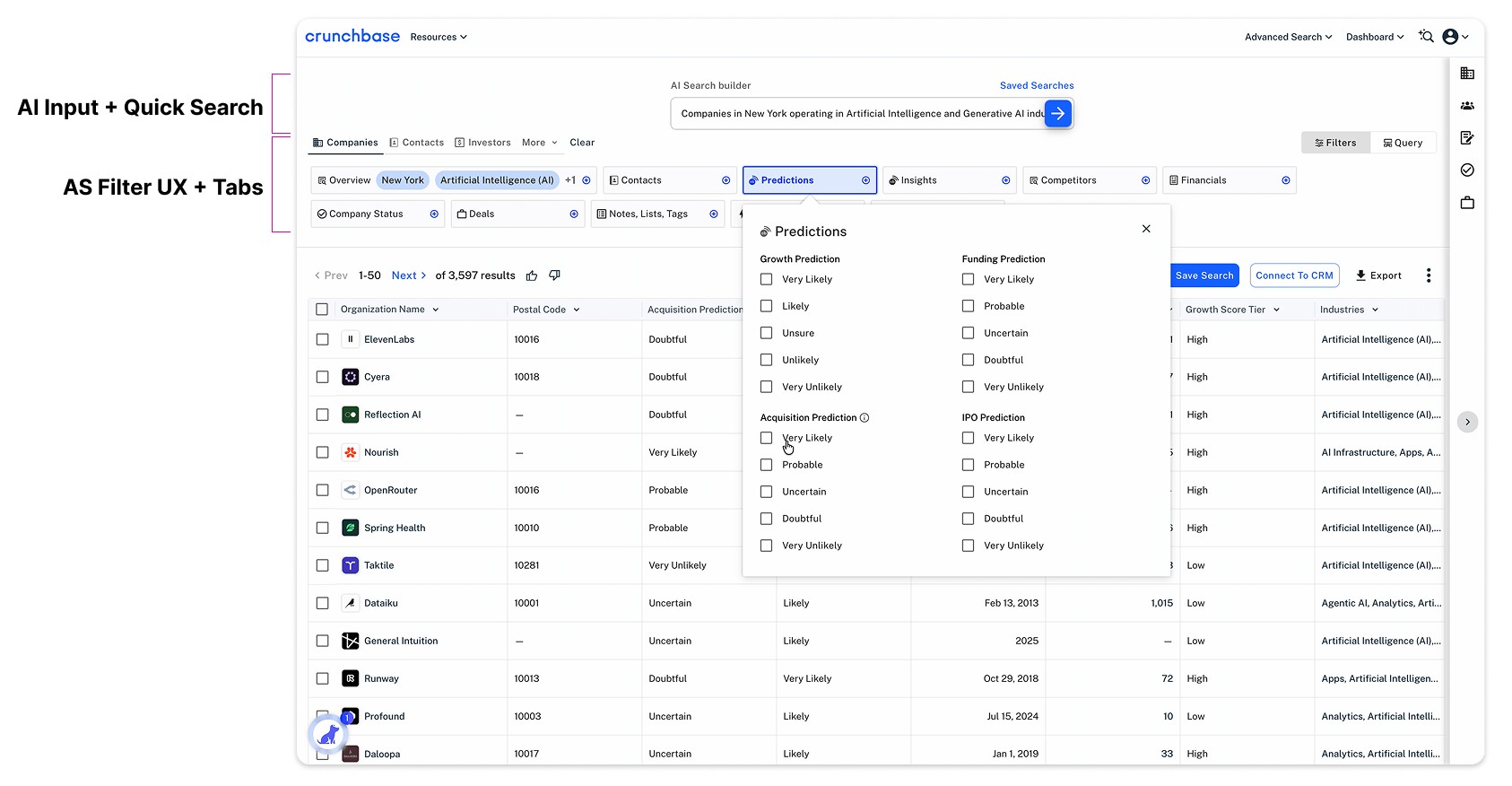
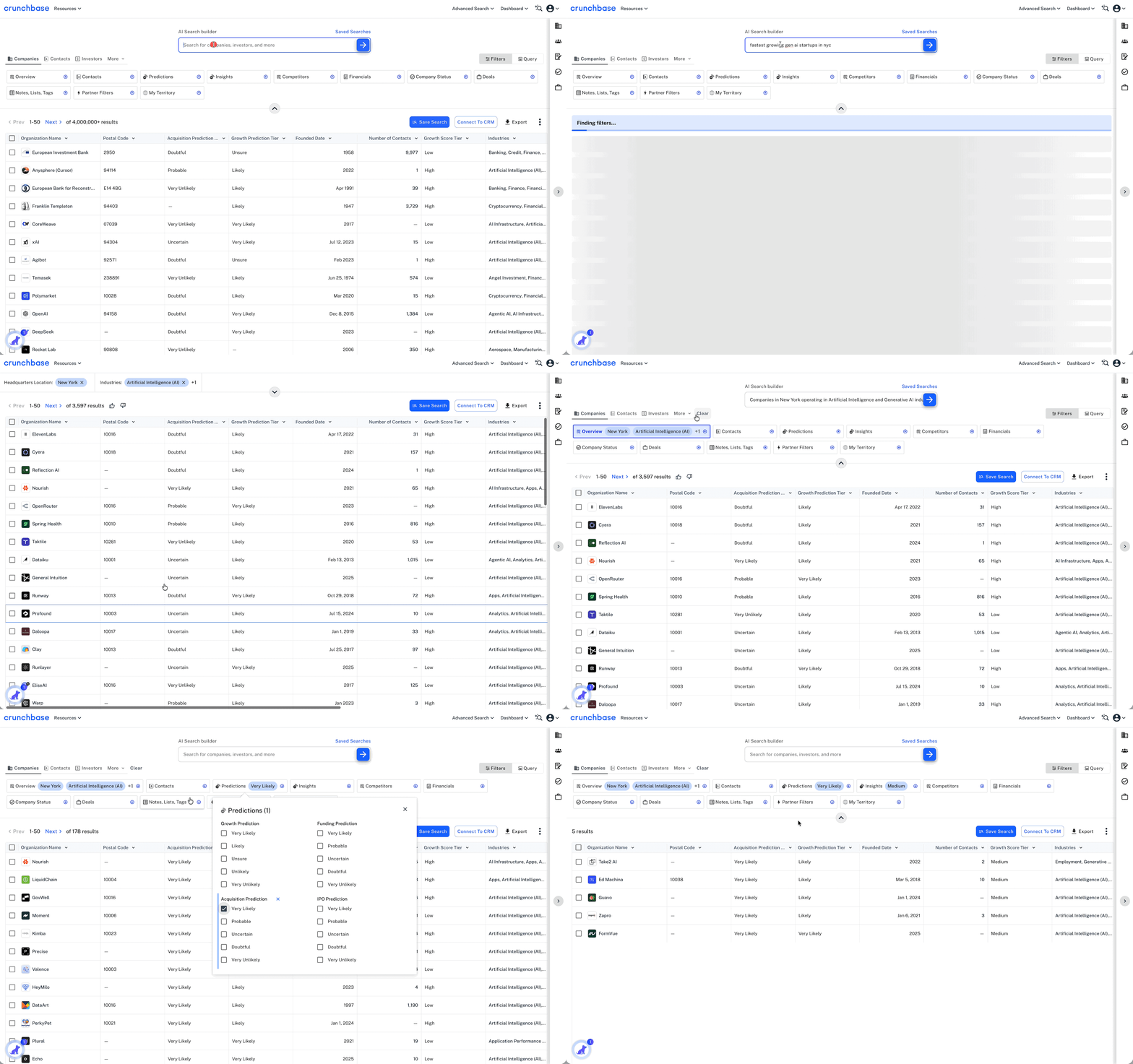
The experience was restructured around three stages of search:
1. Find — Start search with AI filter builder
2. Verify — Review the results
3. Analyze — Edit search by manually removing or adding filters
The shipped experience
Search evolved into a unified experience where natural language and structured search worked together rather than competing for attention. AI became another way to begin a search, while Advanced Search continued to support deeper refinement through a simplified filter experience. Together, they created a more flexible workflow that served both lightweight discovery and complex research.
Outcome
Launched Feb 2025
4x increase in 6-month retention
11% increase in users saving searches
45% decrease in median searches per user before saving
4x paid users engaging with Saved Searches
How I design for complex data
This project reinforced several principles that continue to shape how I approach complex, data-rich products:
- Define the right problem before designing the solution. I identified a strategic opportunity before it became a roadmap initiative and built alignment through research, experimentation, and product data.
- Reduce risk through incremental learning. Rather than pursuing a large redesign, I used a series of focused experiments to validate assumptions, influence product direction, and build confidence over time.
- Make deliberate product tradeoffs. I introduced additional friction during the LLM beta to generate higher-quality feedback, and challenged familiar interaction patterns when reducing cognitive load created greater long-term value.
- Scale through influence. I established the interaction patterns that guided the product direction, then partnered closely with another senior designer to evolve those concepts into production while remaining accountable for the overall experience.
What I’d do differently
I would have pushed for the LLM beta earlier. The most valuable insights came from observing real customer behavior, and introducing that feedback loop sooner would have accelerated both product learning and design iteration.
check out the full case study here
Selected Works

Crunchbase AI ProfilesProduct Design
Crunchbase SearchProduct Design
Crunchbase Prediction CredibilityProduct Design
Cheddar + News12 CMSProduct Design
Pinterest Place PinsUI / UX
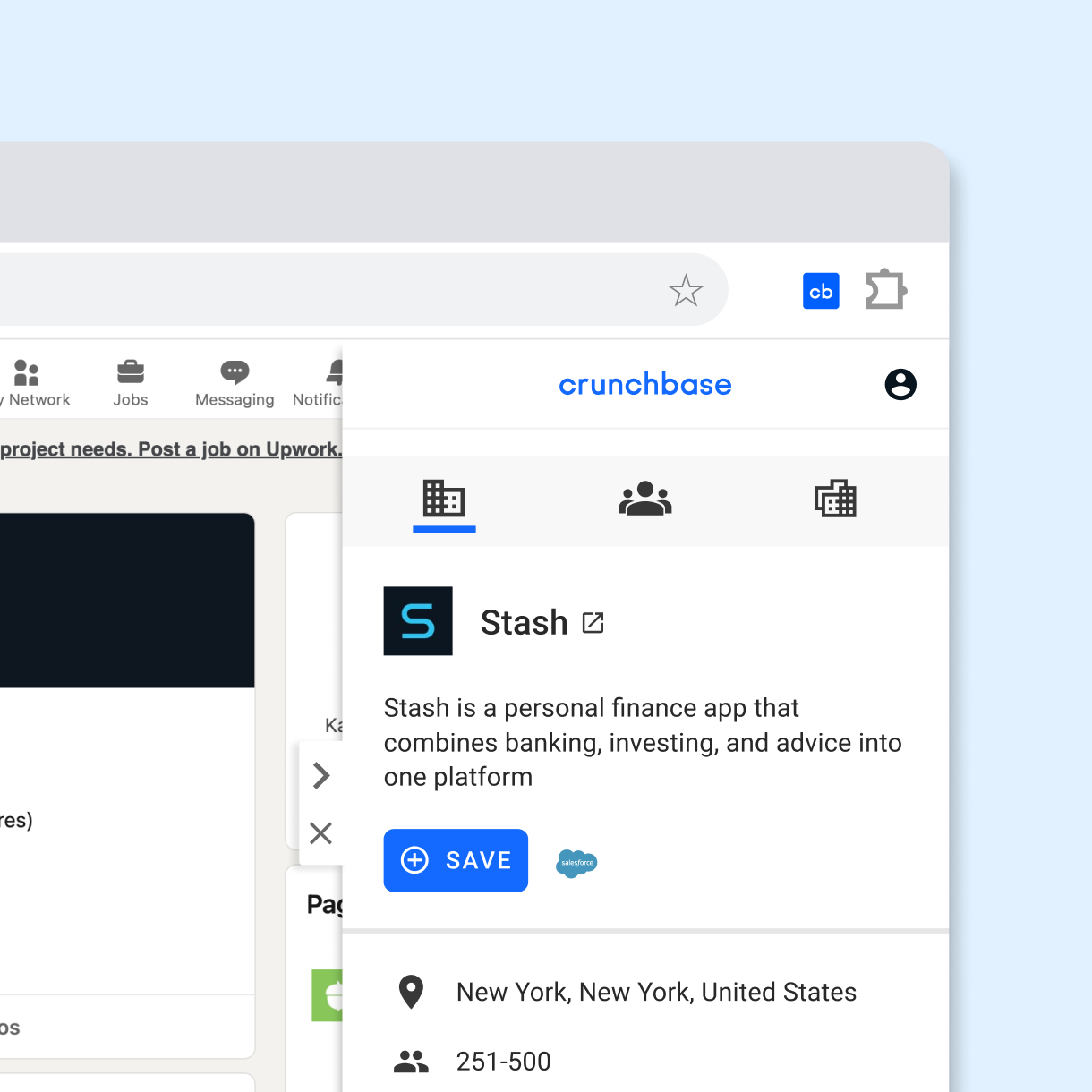
Crunchbase Chrome ExtensionProduct Design
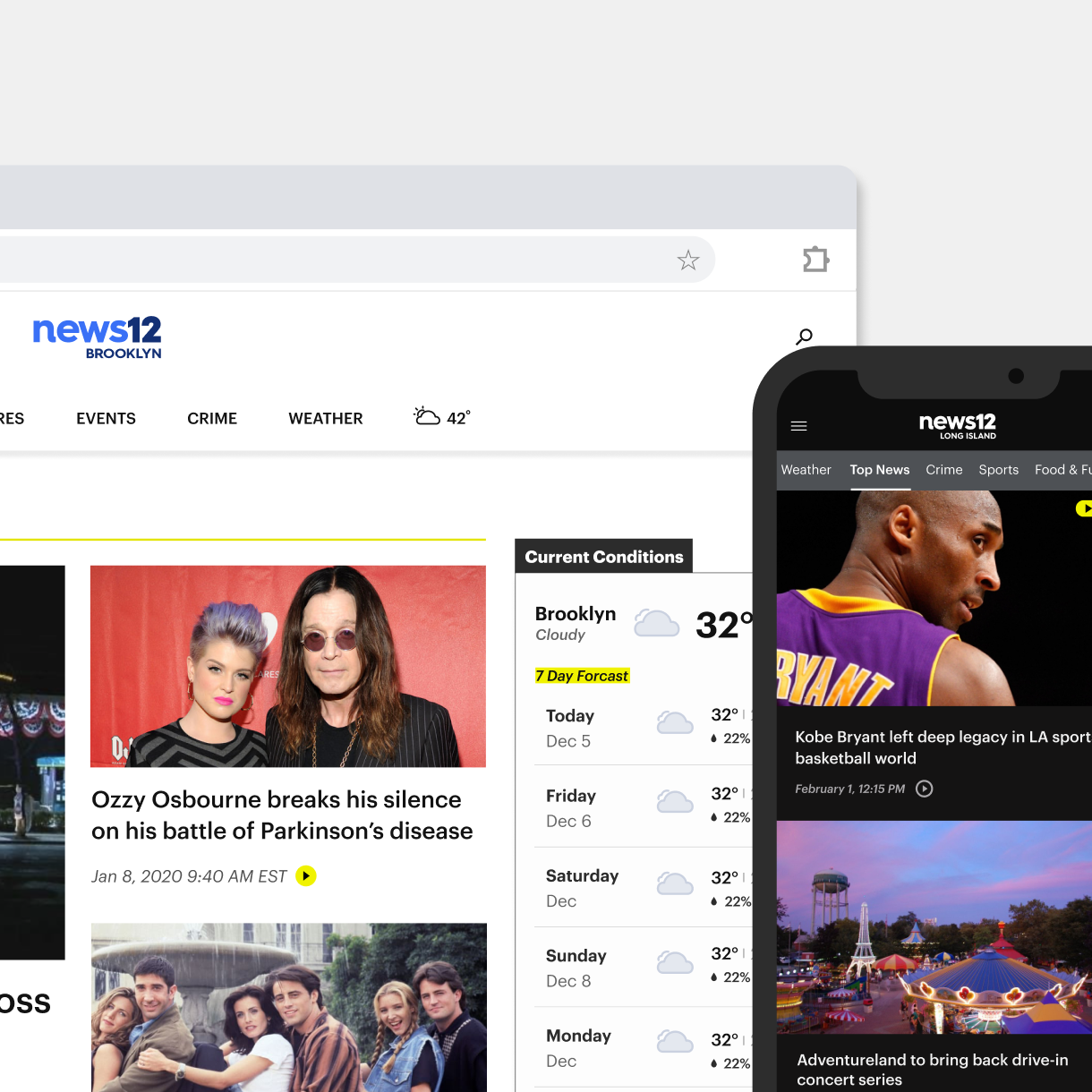
News12 Web & App ExperienceProduct Design

Audubon Climate ReportUI / UX
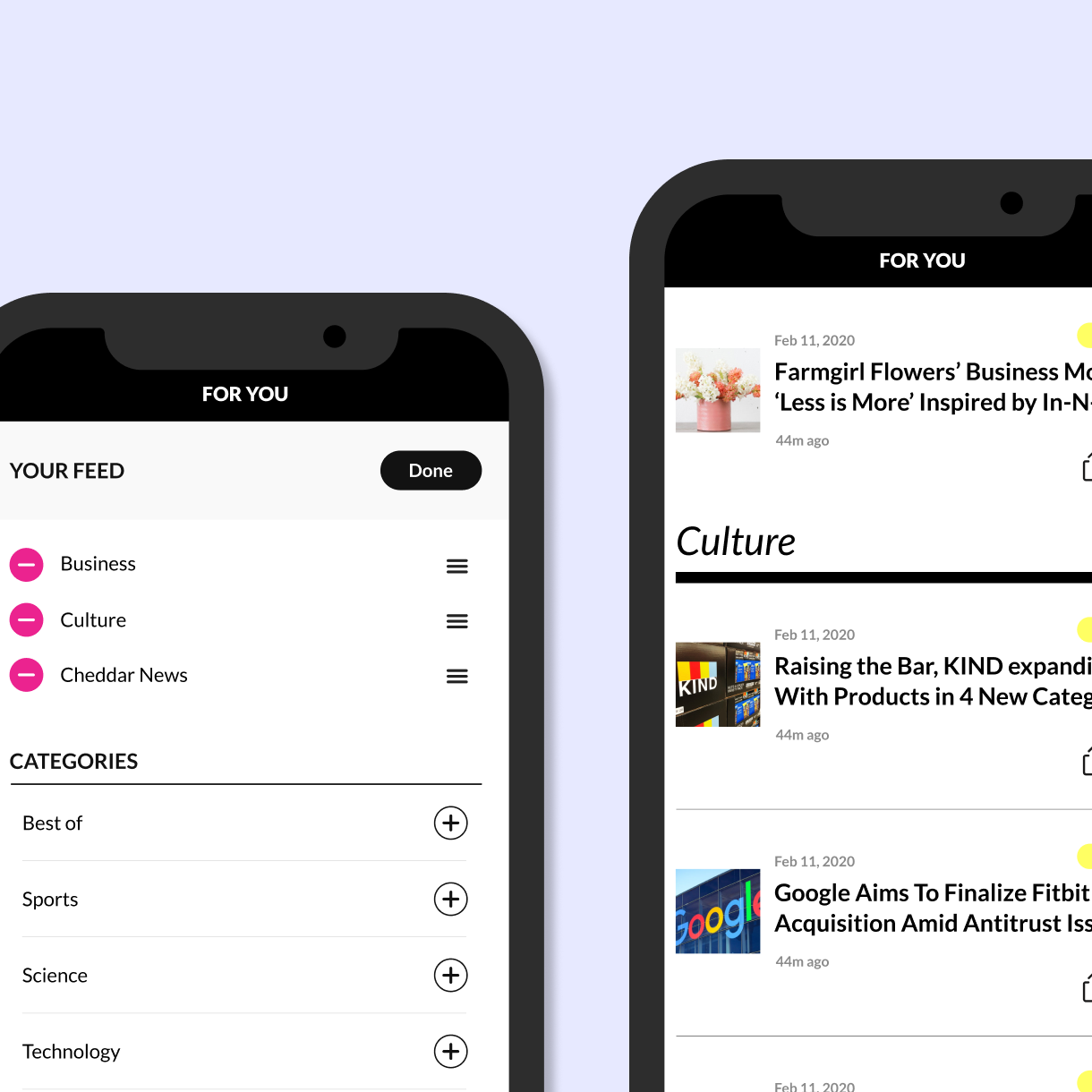
Cheddar Content PersonalizationProduct Design
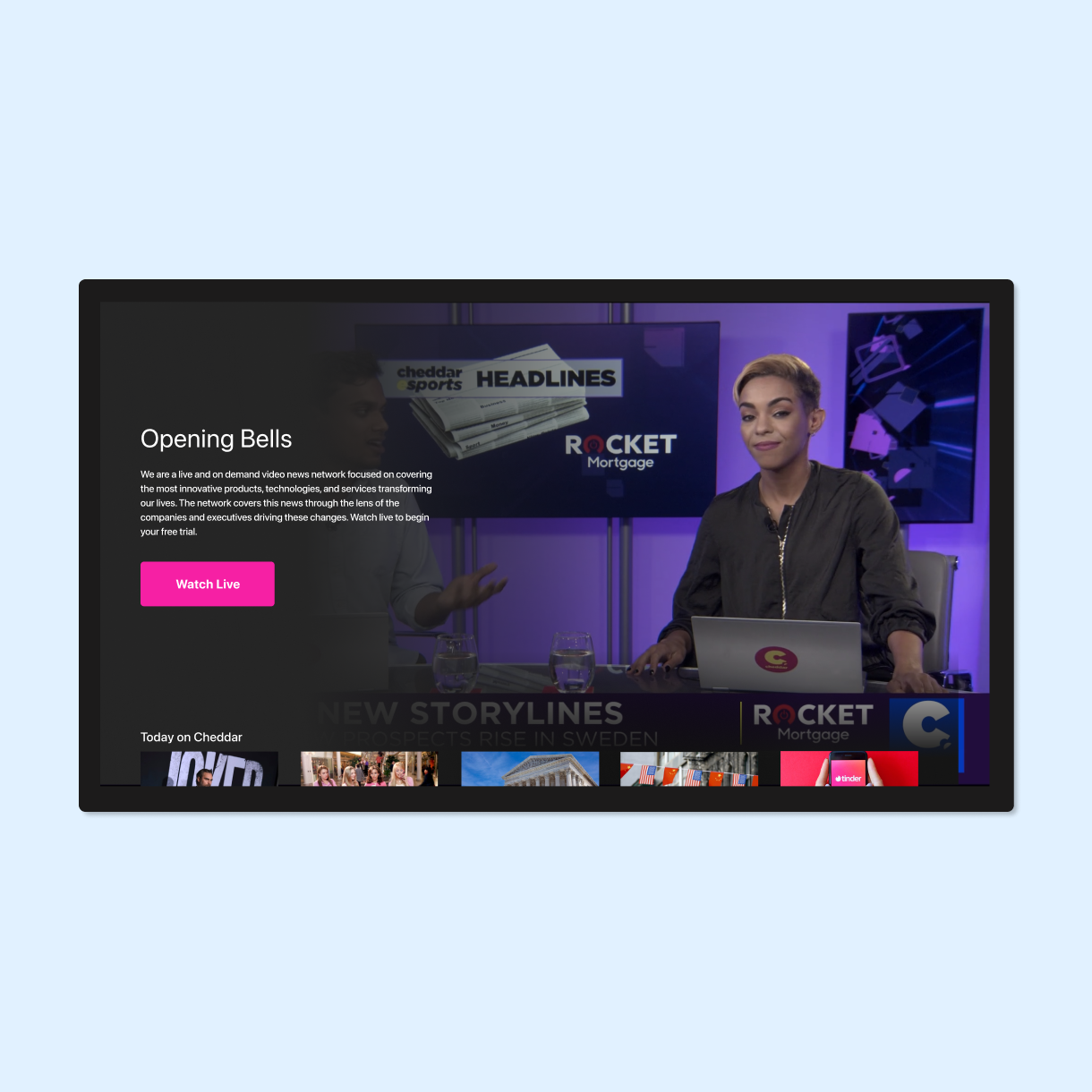
Cheddar tvOS experienceProduct Design
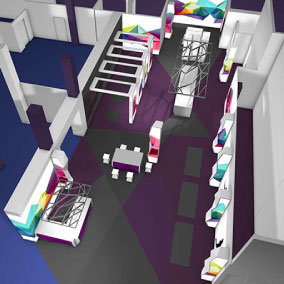
Body Metrics, Tech MuseumExperience Design
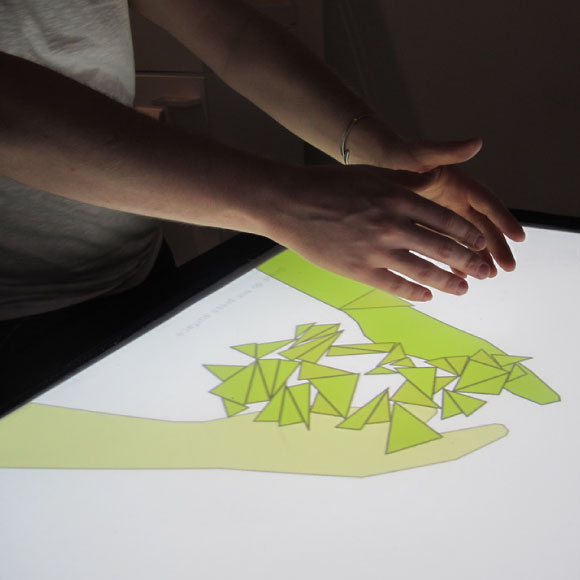
Little ShadowsMFA Design +Technology Thesis
DSI TableParsons
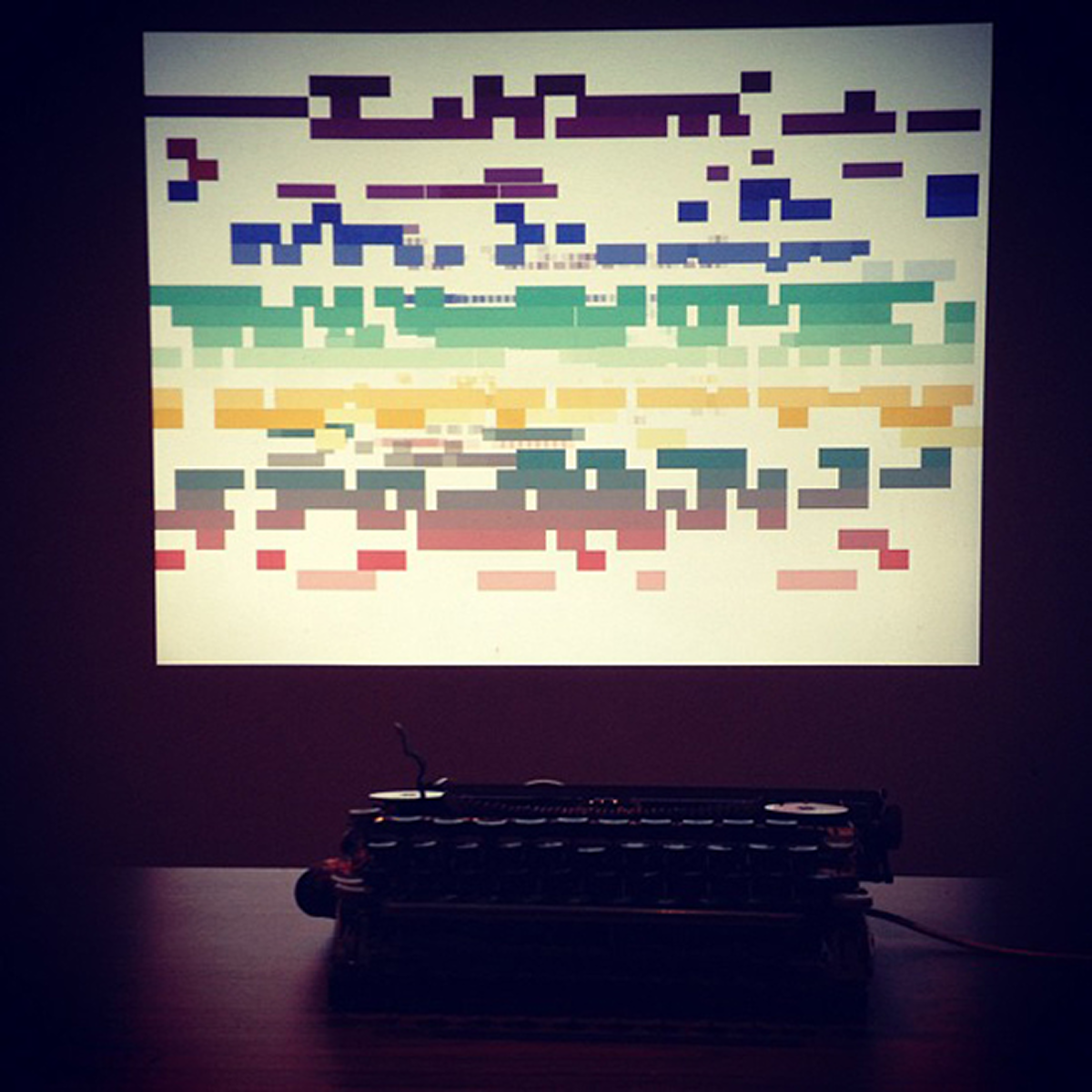
Midi TypewriterParsons MFA D+T
Algorithmic AnimationOpenframeworks

John WhitneyOpenframeworks
IllustrationProject type